

Improvisational theatre as a format for science communication

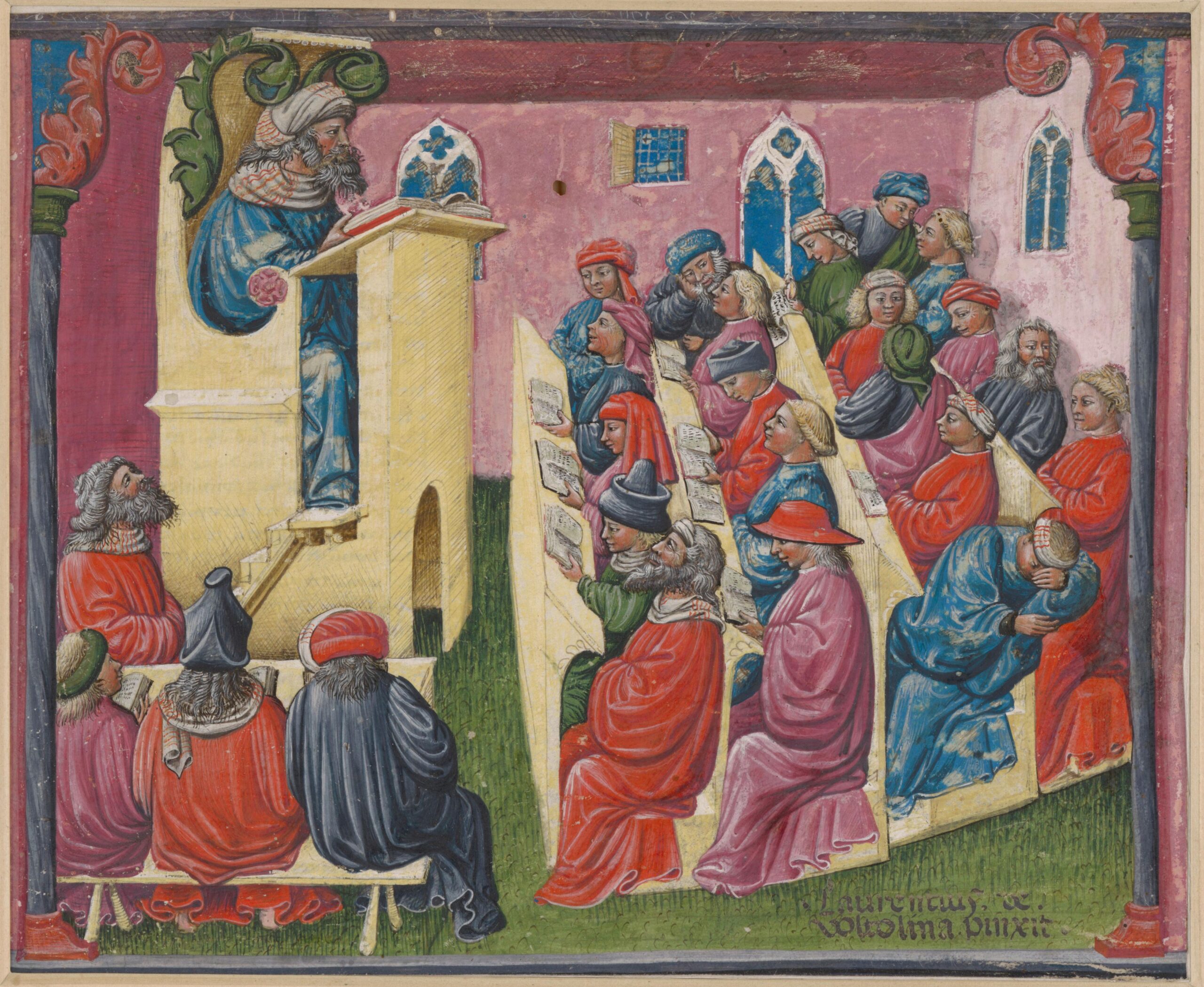
The archives of the local university hold numerous files from the academic court in Münster. Among them are hundreds of case files dating from 1835 to 1902 with telling titles that already give a first impression of the cases heard: These include, for example, investigations into students ‘for drunkenness and violating the curfew’ (1841), ‘for night-time mischief’ (1855), ‘for picking flowers at night in the Hörster Cemetery’ (1884) or ‘for extinguishing all the lanterns on Salzstraße’ (1885). Most of the cases heard concern breaches of academic regulations. However, there are also isolated instances in which students harassed girls or women or made antisemitic remarks to individuals. Other cases, or the statements made during witness hearings, raise a smile (‘We cannot admit to the criminal acts of which we are accused. We were senselessly drunk and know nothing of the whole incident.’) or seem curious (‘We initially spoke about trivial matters: the end of the world caused by the comet and the like’).
Further documents provide information on the administration and implementation of the regulations relating to the academic court. The oldest date from 1834; these consist of a transcript of the disciplinary laws and statutes of the Academy of Münster. There are also written records concerning the court clerk of the university (pedell) and the detention cell (karzer), as well as numerous letters from the university management and administration. The academic court came to an end by 1922 at the latest, when newly introduced disciplinary rules abolished punishments such as detention in the detention cell, and the title of ‘university judge’ was replaced by that of ‘university council’ in the staff directories. Overall, the records of the academic court offer a fascinating insight into local legal history.
As I had already worked with these records in a previous project, their potential for finding a suitable topic for a new science communication format for the Kolleg was obvious, for several reasons: Firstly, it establishes links to the everyday lives of a local audience. Münster is a city strongly shaped by the university and student life; many of the locations mentioned in the cases still exist today or can at least be pinpointed within the cityscape.
Secondly, the topic has a certain element of surprise. Unlike cities such as Marburg or Heidelberg, where the universities’ detention cells have been preserved and can be visited as museums, the academic court in Münster represents a rather overlooked chapter in the local history of higher education. And thirdly, the subject matter can be communicated in an accessible way to an audience without specialist prior knowledge.

© KHK EViR
To begin with, we asked ourselves which target groups we wanted to reach. As the project brings student life in the 19th and early 20th centuries to life, students were an obvious choice. We hoped to spark an interest in legal history and perhaps even encourage a sustained engagement with the topic, facilitated by a website offering supplementary materials in the form of transcribed and annotated sources (uni.ms/karzer).

We opted for a public evening event with a high potential for interaction. We chose a combination of thematic presentations and improvisational theatre, in which the audience is actively involved in shaping the improvised scenes. For the venue, we chose the F24, a student-oriented pub in Münster’s old town.
We then organised the event on 11 May 2026, entitled “Karzer & Kometen”, in collaboration with Peng! Improtheater. The group from Münster already has experience with science-related formats: for example, their events explore the biographies of historical figures as well as topics from the natural sciences, using urban spaces or museums as their stage. The collaboration ran smoothly and was based on a division of labour – we provided the material, while Peng came up with great ideas for turning that content into specific improv formats.
To assess whether the combination of science communication and improv theatre works, we carried out a comprehensive evaluation of the format in cooperation with the Department of Communication at the University of Münster. As part of the registration process, we asked (on a voluntary basis) whether the person registering was a student and why they were attending the event. It turned out that only a quarter of those who registered were students. In many cases, the motivation for attending the event was a combination of scientific interest and a desire for entertainment.
A total of 45 people attended the event. After I gave a brief introduction to the topic of the academic court, two members of the Peng Ensemble improvised several scenes. They drew inspiration from, amongst other things, quotations from the case files. They also imagined three possible outcomes for a case – before the historically documented outcome was revealed. An interview segment with me focused on working with historical sources. The audience participated by suggesting terms on which the scenes were improvised; they decided on the outcome of the cases and asked questions.

© KHK EViR
From the evaluation carried out, we can conclude that the format has been well received. Based on the survey conducted during the event using paper questionnaires, as well as a follow-up online survey designed to gather more in-depth feedback, further conclusions can be drawn: the content was rated as engaging and entertaining, and the humorous approach to the topic was welcomed. The overwhelming majority agreed with the statement that they had learnt something about legal history and expressed an interest in exploring the topic further. The fact that participants were able to get actively involved was also appreciated. Almost all respondents could imagine attending a similar event again. The positive feedback encourages us to repeat this type of event in future with different topics and experts, and to continue experimenting with unconventional formats of science communication.

Kathrin Schulte is a historian and has been working in science communication at the Käte Hamburger Kolleg ‘Legal Unity and Pluralism’ at the University of Münster since 2024.
Cite as:
Schulte, Kathrin, Detention Cells and Comets, EViR Blog, 10.07.2026, https://www.evir.uni-muenster.blog/en/detentioncellsandcomets/
Lizenz:
This work is licensed under a Creative Commons Attribution-ShareAlike 4.0 International License.


Leave a Reply