

Balancing paid work with family care responsibilities is not easy. Most people are aware of this, whether they have children or relatives in need of care, whether they themselves need support and care, or whether they are going through life on their own. Most people know this simply because the issue is frequently discussed both in private and in society at large.
But isn’t it strange that something so central to our personal and social lives becomes a problem as soon as it comes to paid work – that is, earning money? This would not be the case if everyone was granted the same opportunities for personal fulfilment and development, without assuming from the outset that a particular group of people (‘women’) are responsible for private care work and must accept the resulting disadvantages.
Yet this assumption forms the basis of our current labour laws: the breadwinner model – in other words, the idea that one person (usually a ‘man’) devotes their full working capacity to the labour market and, in return, earns the money on which the family lives. The second person (assumed to be a ‘woman’) is responsible for raising the children, doing the housework, looking after relatives, doing voluntary work, and so on – activities that are essential to society, but which have no economic equivalent. Consequently, these activities are carried out in economic dependence on another person, which also carries risks of violence and exploitation.
The situation may have become somewhat more nuanced in recent decades. In Eastern Germany, for example, where the female labour force participation rate has always been high, things still work differently from Western Germany. Paid maternity leave, parental leave, parental allowance, carer’s leave and part-time work are now widespread across Europe. While these arrangements are helpful, men in particular often encounter resistance from their employers when asking for more parental leave than usual. However, one issue remains: the practical coordination of working hours with childcare is still a private matter. Labour law may offer some assistance in this regard: in many legal systems, individuals have the right to request adjustments to their working hours to accommodate their personal circumstances, unless this conflicts with the company’s organisational structure or business requirements. Nevertheless, even these regulations tend to reinforce individual responsibility rather than holding social institutions to account.

In this regard, labour law reflects societal values: the employer (often together with the works council) sets the rules. Anyone can request an exception; but then they become precisely that: the exception to the rule – the odd one out who refuses to take on the unpleasant Friday afternoon shifts, resulting in others having to work more and make sacrifices. Here, the much-vaunted social recognition of care work suddenly seems as far away as the solidarity of colleagues.
But how could it work any other way? To answer this question, we must analyse the dynamics and logic that shape corporate behaviour and employment law. The law prioritises the organisation. Private care work thus becomes an individual ‘problem’. However, if the organisation of care work in the private sphere does not work out, this ultimately affects everyone. Care work is of the utmost economic importance: without reproductive labour, there can be no production.
Therefore, any solution to the care crisis must depend on care work being distributed fairly, i.e. redistributed from women* to men, and on it no longer being treated as a private matter. Paid work must be organised based on the right to care and the assumption that everyone takes on private care responsibilities.
A wide range of proposals on how to achieve this have been developed. Many of these proposals take a ‘top-down’ approach: a general reduction in working hours (or ‘part-time for all’) with full pay compensation, or equality legislation (proactive duties) that obliges all employers to regularly analyse their employees’ needs in terms of private care work, develop measures to address these needs, and finally evaluate the whole process on a regular basis. This is a good start. We need a bird’s-eye view of institutional frameworks; within every organisation, someone should systematically be in charge of this issue.
However, such systems not only rely on the participants critically examining organisational structures in a sensitive and problem-aware manner, but also on them developing imaginative ways of organising work in a way that would enable everyone to take on private care responsibilities flexibly. But how can this be achieved in a society that is primarily geared towards productivity? A transformation would need to value conflict, recognising that difficult situations can provide opportunities to reflect on existing structures.
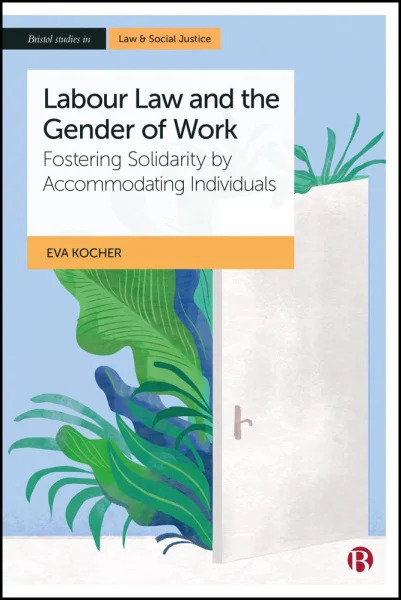
For example, existing regulations could be taken a step further. They often already oblige employers to enter into negotiations when employees request a change to their working hours. Rather than leaving the details of these negotiations to the employer, other stakeholders could be involved. Internal stakeholders such as works councils and anti-discrimination and equality officers would be the first to come to mind here. It also makes sense to involve the person’s immediate colleagues. Perhaps together, solutions can be found that suit everyone better, beyond accommodating just one individual? Also, why not reach out to the wider community and speak to nurseries, partners and children of employees? They could help relieve some of the pressure and may also have ideas about how to balance the paid work of their family member with private care responsibilities.
Another idea is not to wait for an employee to approach their employer with a request that could lead to a potential conflict. After all, the most critical moment for working parents is well known: when they return from parental leave, they are usually faced with the question of how to better reconcile paid work with their now-changed family care arrangements. If employers were obliged to proactively reach out to parents at this stage and engage with them in an open-ended process to find suitable solutions, the burden of taking the initiative would be lifted from employees. This would also prevent rigid positions from forming early on.
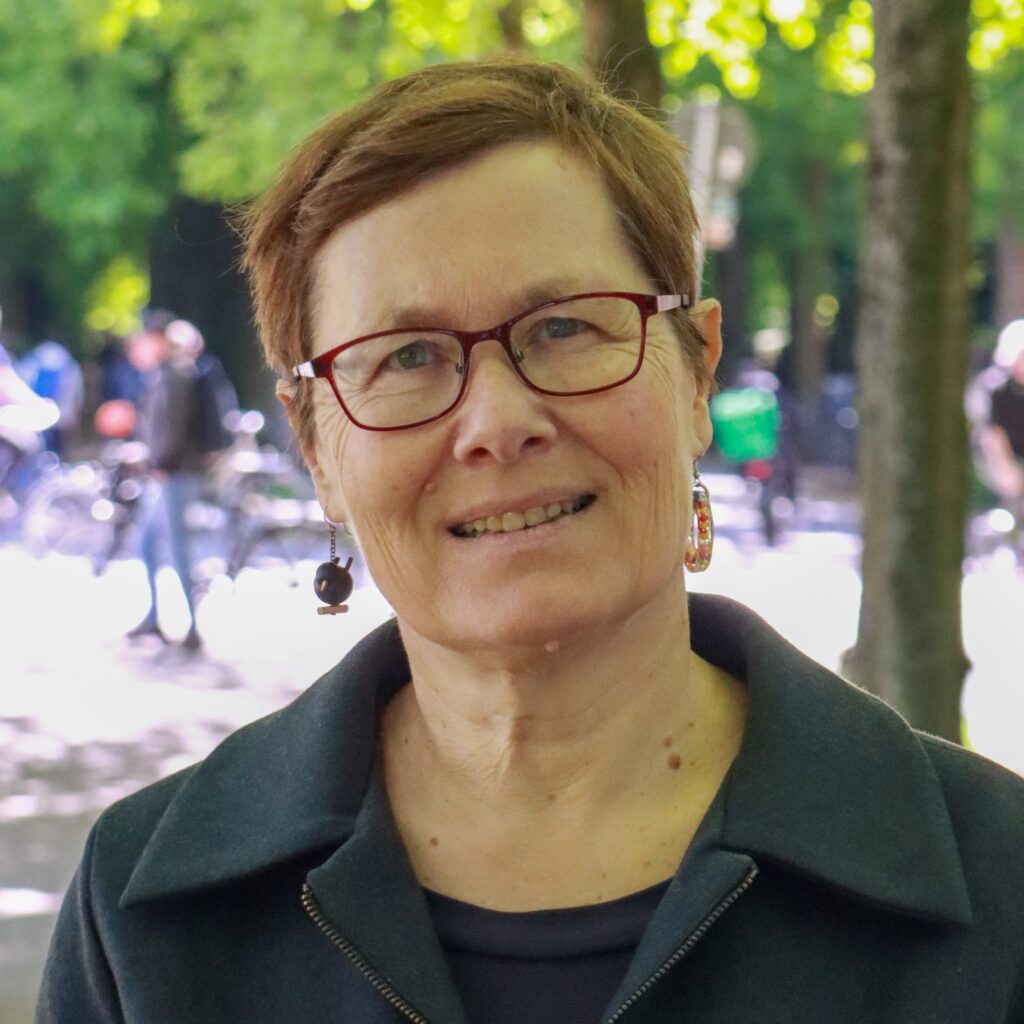
Prof. Dr. Eva Kocher heads the Center for Interdisciplinary Labour Law Studies at the European University Viadrina, Frankfurt (Oder). Her research focuses on collective labour law, anti-discrimination law and platform work. During the summer semester of 2026, she is a fellow at the Käte Hamburger Kolleg.
Cite as:
Kocher, Eva, Private Care Work and Labour Law, EViR Blog, 15.09.2026, https://www.evir.uni-muenster.blog/en/private-care-work-and-labour-law/.
License:
This work is licensed under a Creative Commons Attribution-ShareAlike 4.0 International License.


Leave a Reply